Set the body line first
For bride in lehenga poses, decide the weight shift, shoulder angle, and spacing before changing expression.
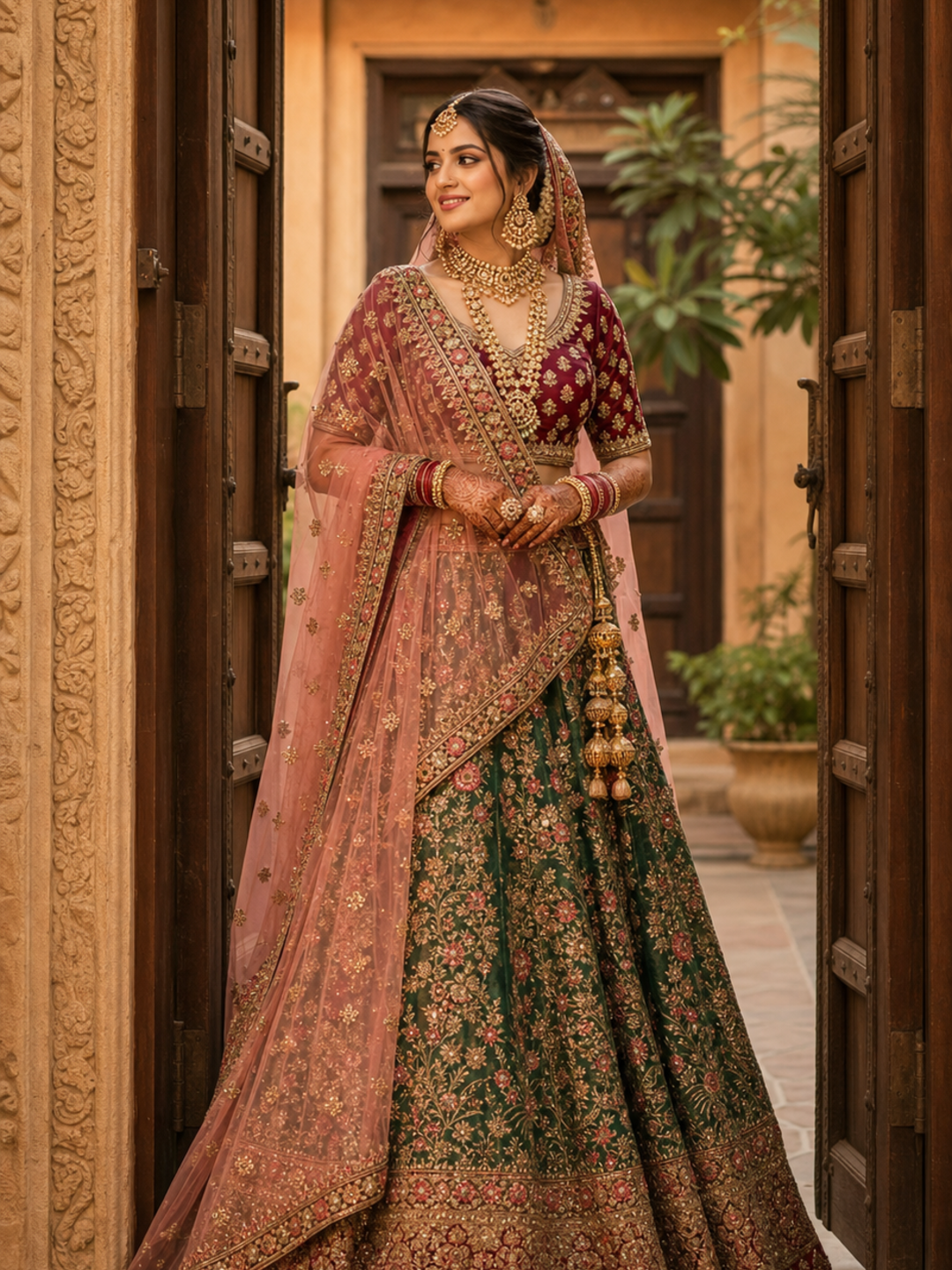
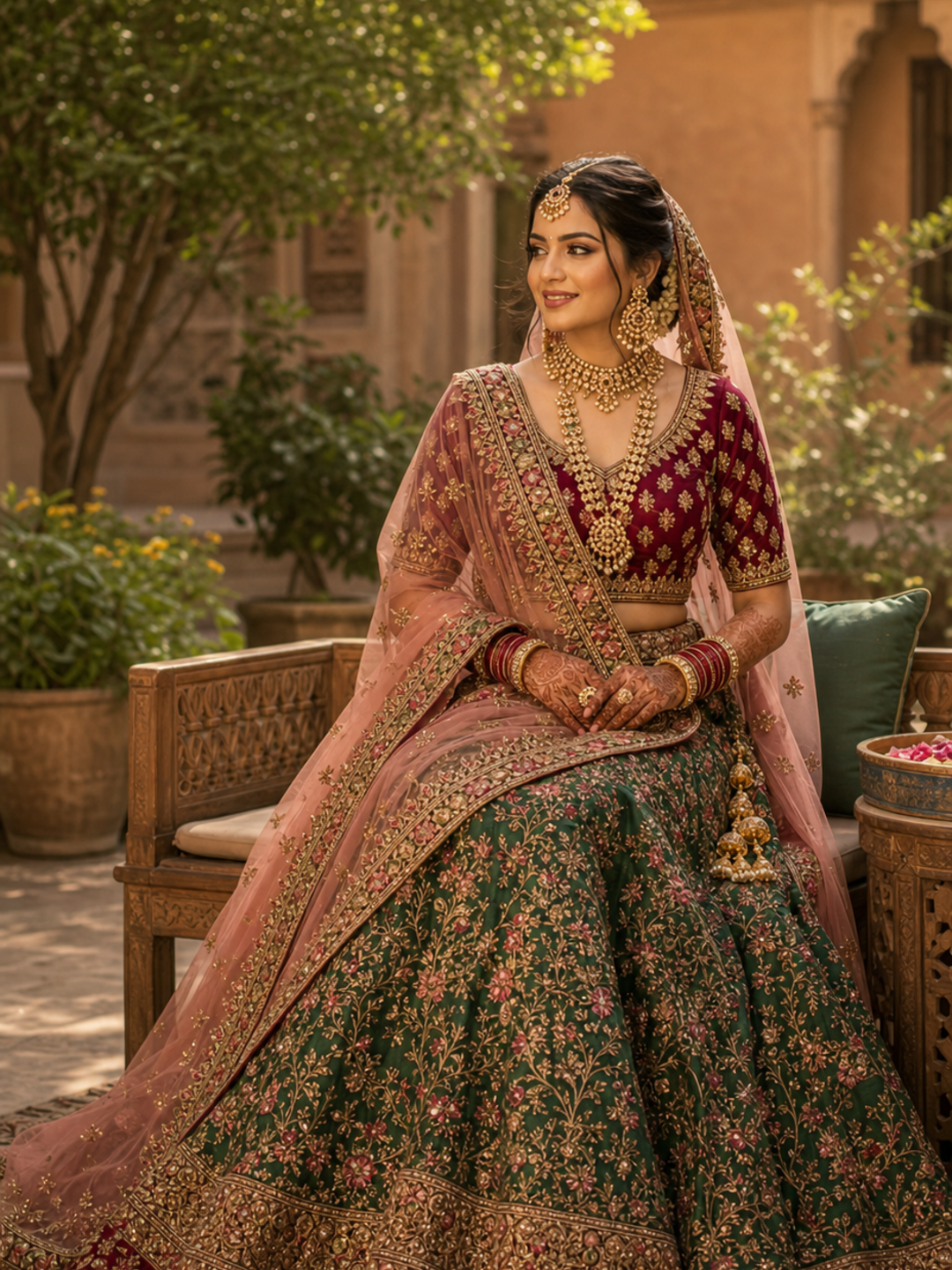
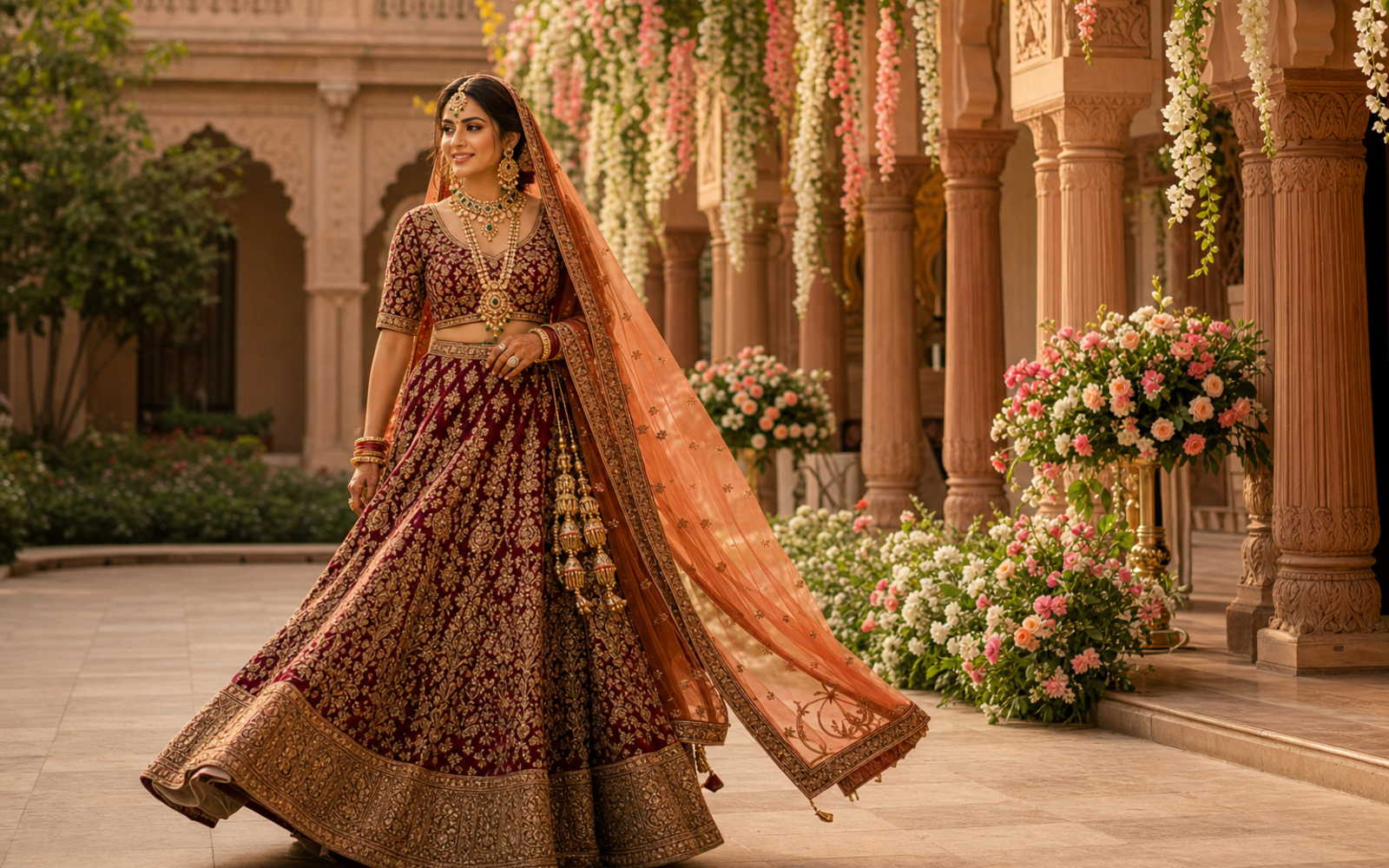
Bride-in-lehenga poses must show the drape, embroidery, hands, and face without hiding the silhouette. These references cover doorway, seated, and walking bridal frames.
For bride in lehenga poses, decide the weight shift, shoulder angle, and spacing before changing expression.
Use pockets, fabric, props, nearby edges, or gentle connection so hands do not hang without purpose.
Turn faces toward window light, open shade, or soft side light before making the final frame.
Leave room around heads, hands, elbows, outfit lines, and feet whenever the pose mechanics matter.
Each image is a practical pose reference for taking a real photo. Copy the body direction first, then adjust hands, eyes, and frame for the person and location.
A vertical bridal lehenga pose with full outfit and doorway framing.
A vertical seated lehenga pose that shows fabric and posture.
A horizontal bridal lehenga image with movement and venue context.
Use these notes as the technical layer behind the pose: lens choice, light, spacing, timing, and the mistake to avoid.